


Ludo on Spin Crush
Ludo is a classic cross-and-circle board game where two to four players race their tokens from the starting yard to the home triangle in the center of the board. Each turn is decided by a single die roll, and the mix of movement, capturing opponents, and reaching home first is what has kept the game popular across generations. Spin Crush offers Ludo in its Games collection, played with the same familiar rules described on this page.
What Is Ludo?
Ludo is a racing board game that grew out of older cross-and-circle games. The goal is simple to state: move all of your tokens around the board and into the home area before anyone else does. What makes it interesting is that every move depends on a die roll, so luck opens each turn and your decisions shape what happens next.
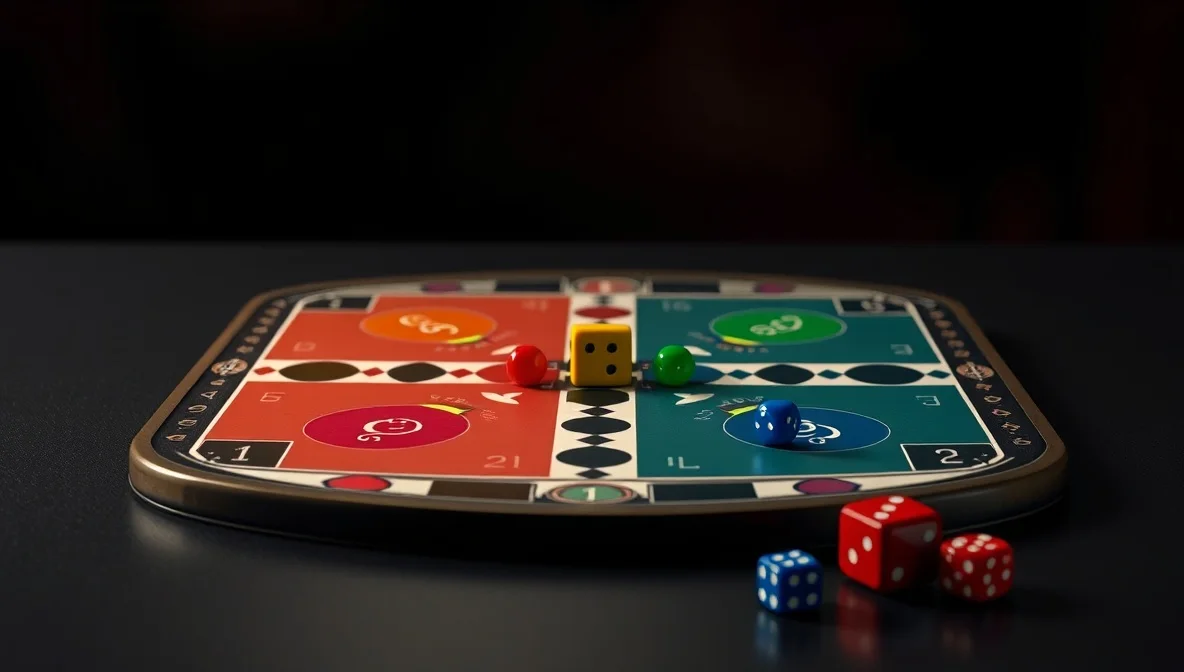
A standard match uses a square board with a cross-shaped track, four colored yards in the corners, and a central home triangle. Each player takes one color and controls four matching tokens. Turns pass around the table, and the first player to get every token home wins. It is easy to learn in a single round, which is a big reason families and casual players keep returning to it.
How a Ludo Game Works
Every round follows the same basic rhythm: roll, move, and pass the turn. The details of capturing and reaching home build on that simple loop, but the core flow never changes.
Players take turns
Play moves clockwise from one player to the next. On your turn you roll the die once, move a token by that amount, and then the turn passes on. If your roll earns an extra turn, you roll again before passing.
Tokens start in the yard
At the beginning, all four of your tokens sit in your colored yard, also called the base. They cannot be captured there. A token must be brought onto the main track, usually by rolling a six, before it can join the race.
The race around the track
Once on the board, a token travels clockwise along the shared track, past the squares of every color, until it reaches the turn into its own home column. The path is the same length for everyone, so the race is about timing and position more than distance.
First to bring all tokens home
The round ends when one player gets all four tokens into the central home triangle. That player wins, and the remaining places are usually decided by how far each opponent's tokens have progressed.
Ludo Board and Tokens
Understanding the board helps every later rule make sense. The layout is the same for all standard versions, so once you know it, you can read any Ludo board.
The cross-shaped track
The playable track forms a cross around the board. Each arm holds a row of squares, and the four arms meet at the center. Tokens move along the outer edge of the cross and never cross through the middle except by entering their home column.
Colored yards and home columns
Each corner holds a yard for one color, and each color also has a home column running from the track toward the center. Only a token of the matching color may enter its own home column, which is why the final stretch feels personal to each player.
The four tokens
Every player controls four tokens of the same color, commonly red, green, yellow, and blue. You decide which token to move each turn, and managing all four at once is where most of the planning happens.
The center home triangle
The middle of the board is the shared home area. Each color has its own corner of the triangle. A token arrives only after climbing its home column with an exact roll, so the last few steps are often the tensest part of the game.
Dice Rolls and Movement
The die is the engine of Ludo. It decides which moves are possible, when a token can leave the base, and whether you get to roll again.
What the number means
A token moves forward exactly the number of squares shown on the die. A roll of three moves a token three squares; a roll of five moves it five. You choose which of your tokens on the board makes that move.
Rolling a six
In most versions, a six has two jobs. It lets you move a token out of the yard onto its starting square, and it usually grants another roll. Because it is the only roll that releases a token, a six often sets up the most important decisions of the turn.
Choosing a token to move
When more than one move is legal, you pick which token advances. You might push a token closer to home, move one out of danger, or line up a capture. The freedom to choose is the main skill the dice hand you.
Impossible moves
If a roll cannot legally move any token, the turn is skipped. This can happen if your only tokens are in the yard and you do not roll a six, or if a move would overshoot the home square. The turn then passes to the next player.
Safe Squares and Capturing
Capturing is what turns Ludo from a calm race into a contest. Knowing where your token is safe changes how bold you can be.
How a capture works
When your token lands on a square occupied by a single opponent token, the opponent's token is captured and sent all the way back to its yard. That token must start its journey again, which can undo several turns of progress.
Where tokens are safe
Safe squares cannot be used for captures. They usually include each player's starting square, the star-marked squares spaced around the track, and the home columns. On a safe square, two or more tokens of different colors can sit together without any of them being sent back.
Stacking your own tokens
Some players keep two tokens on the same square so that at least one is protected from capture, since a single opponent token landing there cannot remove both. Whether a block fully protects tokens depends on the version's rules, but grouping tokens is a common defensive habit.
Extra turns from captures
Many versions reward a capture with another roll, the same way a six does. This can let a strong position keep building, which is why well-timed captures are some of the most satisfying moments in the game.
Reaching the Home Area
Getting a token home is the real objective. The home column and the exact-roll rule are what make the finish line different from the rest of the board.
Turning into the home column
After a full loop of the track, a token reaches the square just before its colored home column and turns inward. From there it climbs the column step by step, no longer sharing the path with opponents.
The exact roll rule
A token can only finish with a roll that lands it precisely on the final home square. If the roll is larger than the steps remaining, the token cannot move, and you must choose a different token or skip. This rule keeps the finish close and prevents a lucky overshoot from ending the game.
Winning the round
When all four of your tokens reach the home triangle, you win. Bringing the first token home is a milestone, but the round is decided only when the last one arrives, so protecting your lead matters as much as building it.
Ludo Game Variants
Ludo comes in several common formats. The board and the rules stay close to the standard version, but the number of players and the pace can change.
Two-player and four-player
The classic version seats up to four players, one per color. Two-player games use two opposite colors, which changes how often tokens meet on the track. Fewer players usually means a calmer board with less crowding.
Quick or short-track Ludo
Some formats shorten the journey so a round finishes faster. This can mean fewer squares per lap or a rule that releases tokens more easily. The result is a lighter, quicker session that suits casual play.
Team mode
In team versions, players pair up, often using opposite colors, and share a win when both partners get their tokens home. Cooperation and protecting a partner's tokens add a different feel to the usual competition.
House rules
Groups often adapt small details, such as how many sixes in a row are allowed or whether a capture always grants another turn. These local tweaks do not change the heart of the game, but they are worth confirming before a match so everyone plays by the same rules.
Understanding Chance and Strategy
Ludo sits in an interesting spot between pure luck and skill. The dice control the options, but your choices within those options still matter.
Where chance leads
Every move starts with a random roll, and no choice can change the number. Long streaks of low rolls or missed sixes can stall a token no matter how well you plan. This randomness is built into the game and cannot be designed around.
Where decisions matter
When several moves are legal, picking the right one is a real decision. Moving a token to safety, setting up a capture, or holding tokens together can shift the round. Good players reduce risk and pressure opponents without ever controlling the dice.
No guaranteed outcome
No strategy removes the role of chance, so no approach can promise a win. The most useful habit is to play the position in front of you, manage your tokens steadily, and treat each roll as its own event rather than part of a pattern.
Common Ludo Mistakes
A few habits cause most avoidable setbacks. Spotting them early makes the game feel more controlled.
Rushing tokens out of the yard
Releasing every token the moment a six appears can leave them exposed on the open track. Sometimes it is wiser to advance a token already in play or wait until the board is safer before spreading your pieces out.
Forgetting safe squares
New players sometimes leave a token one square short of a safe spot or step onto an unsafe square within reach of an opponent. Watching the star squares and starting squares helps avoid needless captures.
Ignoring the exact-roll finish
Overshooting the home square wastes a turn and can leave a token stranded near the end. Counting the remaining steps before you move a token in its home column prevents a frustrating stall at the finish.
Chasing one opponent
Focusing only on capturing one player can leave your other tokens unprotected and slow your own progress. Balancing attack with getting your pieces home is usually the steadier path.
Ludo on Spin Crush
Ludo is part of the Games collection on Spin Crush. It follows the same standard board rules described on this page, with a digital board, on-screen dice, and automatic movement so you can focus on your turns.
Open the game
Go to the Games section and select Ludo. The table shows the board, your tokens, and the controls. Take a moment to see how many players the table seats and how the layout is presented before your first roll.
Roll and move
Each turn, the die is rolled and your available moves are shown. Choose which token to advance, and the board updates automatically. Captures, safe squares, and the home column all work as described in the rules above.
Reaching home
As your tokens climb their home column, the exact-roll finish applies just like a physical board. The round ends when a player brings all four tokens home, and the result is settled on screen.
What to Know Before Playing
A few quick checks make the first rounds clearer and help avoid simple mistakes.
Confirm the player count
Check how many players the table seats before you join. A two-player table plays differently from a four-player one, and knowing the setup helps you plan your opening moves.
Review the controls
Spend a moment learning how to roll, select a token, and read the highlighted moves. Knowing the controls before a close turn keeps you from hesitating at the wrong moment.
Know the turn rules
Understand when an extra roll is granted, such as after a six or a capture, and how the exact-roll finish works. These are the rules that most often surprise new players mid-round.
Set a session limit
Decide on a spending limit before you begin. Because rounds are self-contained, it is easy to keep playing longer than planned. A limit in mind helps you stop while the session is still comfortable.
Responsible Gaming
Ludo is entertainment, not a way to make money. Keep these principles in mind:
Set a spending limit
Choose a budget that you are comfortable losing before you begin. Treat each stake as the cost of entertainment rather than an investment that will return a profit.
Do not chase losses
Increasing your stake because previous rounds went against you is one of the fastest ways to reduce your balance. Each round is independent, and larger stakes do not make a win more likely.
Take breaks
Long sessions can blur judgment and make it harder to track how much time and money has been spent. Short breaks keep the experience enjoyable and help you stay aware of your limits.
Play where legally permitted
Ensure that your participation complies with the laws and age restrictions in your jurisdiction. It is your responsibility to verify that you are allowed to play.
Ludo FAQs
What is Ludo?
Ludo is a cross-and-circle board game for two to four players. Each player moves four tokens around a shared track using dice rolls, aiming to bring all of them safely into the central home area before the other players.
How does a Ludo game work?
On a turn, a player rolls a die and moves one token forward the number shown. A six is usually needed to move a token out of the base, and rolling a six typically grants another turn. The game continues until one player gets all four tokens to the home area.
How does the dice roll affect movement?
A token moves exactly the number of squares shown on the die. A roll of six lets a player release a token from the base or advance one already on the board, and it usually earns an extra turn. Lower rolls advance tokens step by step along the track.
What happens when a token is captured?
If a token lands on a square occupied by an opponent's token, the opponent's token is captured and sent back to its base. The captured token must start its journey again. This does not happen on safe squares, where multiple tokens can sit together without being captured.
What are safe squares in Ludo?
Safe squares are marked positions where a token cannot be captured. They typically include each player's starting square, the star-marked squares around the track, and the home column of each color. Multiple tokens can occupy a safe square at the same time.
How do players reach the home area?
After circling the track, a token turns into its colored home column and moves toward the central home triangle. A token can only enter the home area with an exact roll that lands it on the final square. The first player to bring all four tokens home wins.
Is Ludo based on chance or strategy?
Ludo is mostly a game of chance because the die decides every move, but strategy still matters. Choosing which token to move, when to leave base, and when to capture or play safe can change the outcome. No approach can remove the randomness of the dice.
What should players understand about Ludo on Spin Crush?
Ludo on Spin Crush follows the same standard board rules described on this page. It is available in the Games collection. Before playing, take a moment to review the table layout, the number of players, and the on-screen controls.