
Blackjack on Spin Crush
Blackjack on Spin Crush is a card game where you and the dealer each receive starting cards, and the goal is to finish with a hand total closer to 21 than the dealer without going over. Every round involves decisions about taking more cards or stopping, so knowing the basic actions and card values before you play helps.
What Is Blackjack?
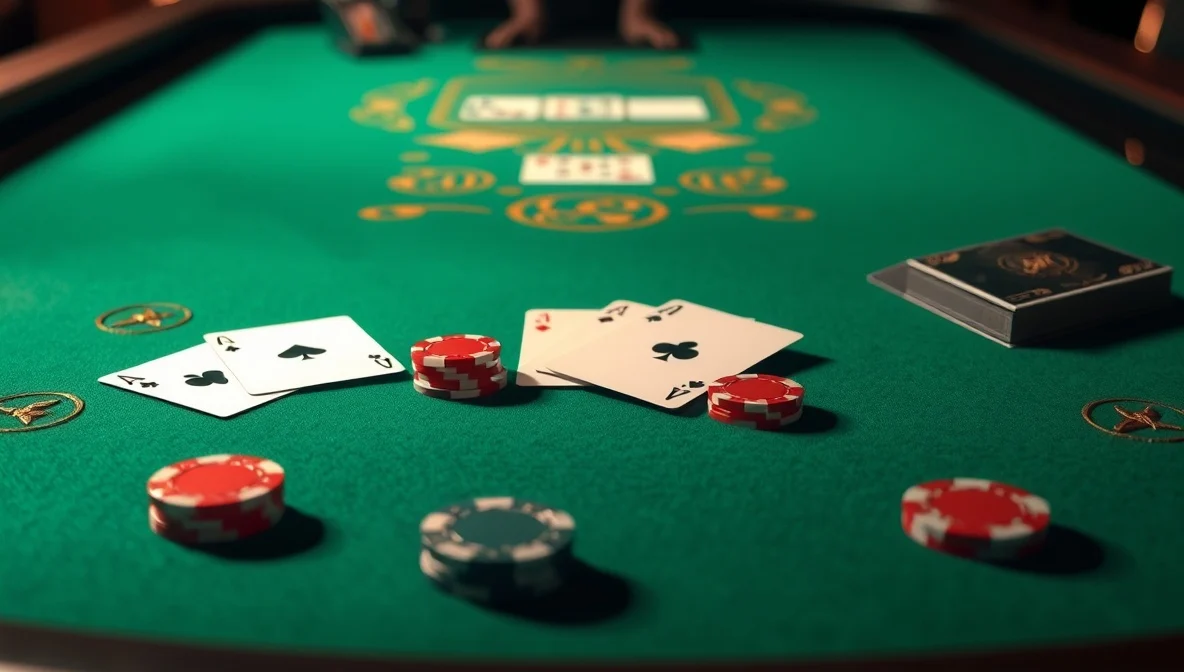
Blackjack is a comparing card game between the player and the dealer. Each round starts with two cards dealt to the player and two to the dealer, with one of the dealer's cards placed face up. The player sees both of their own cards and uses their values to decide how to proceed.
The aim is simple: build a hand closer to 21 than the dealer's without going over. If the hand goes over 21, it is a bust and loses immediately, no matter what the dealer holds. Because the player acts first, managing the total before crossing the limit is the central tension of every round.
A hand worth 21 made from exactly two cards is called a natural Blackjack or simply a Blackjack. It is stronger than a regular 21 created from three or more cards, and it usually carries a higher payout when the dealer does not also hold a natural Blackjack. The name of the game comes from this specific two-card combination.
How a Blackjack Round Works
A round follows four stages: the initial deal, the player's turn, the dealer's completion, and settlement.
Initial deal
The player receives two face-up cards. The dealer receives two cards, but only one is shown to the player; the other remains hidden until later in the round. This hidden card is important because it affects the dealer's final total and changes how the player should evaluate their own hand.
Player decision
Using the visible cards and the dealer's up card, the player chooses whether to take another card, keep the current hand, increase the wager, or split matching cards into separate hands. Each choice changes the total and the risk of busting. The player continues making decisions until they stand, bust, or run out of available actions.
Dealer completion
Once the player's hand is complete, the dealer reveals the hidden card and draws additional cards according to fixed rules, usually drawing until reaching a set minimum total such as 16 or 17. The dealer does not make strategic choices in standard Blackjack; they follow the table's predetermined drawing rule.
Settlement
After the dealer finishes, the final totals are compared. If the player has not busted and holds a higher total than the dealer, the player wins. If the dealer's total is higher, the player loses. Equal totals result in a push, with the original wager returned. A player with a natural Blackjack wins immediately unless the dealer also has a natural Blackjack, in which case the round is a push.
Understanding Blackjack Card Values
Blackjack uses a simple scoring system that becomes intuitive quickly once you know how each card type contributes to the total.
Number cards
Cards from 2 through 10 count at their face value. A 5 adds 5 to the hand total, an 8 adds 8, and so on. There is no ambiguity with these cards, which makes them the easiest to track during a round.
Face cards and the ten
Jack, Queen, King, and the 10 card all count as 10. These four ranks are often called ten-value cards. Because they are worth the same amount, they are the most valuable building blocks for a strong hand and the key component of a natural Blackjack.
The Ace
The Ace is unique because it can count as either 1 or 11, whichever benefits the hand more. This flexibility lets the Ace protect you from busting in many situations, and it is also the reason a two-card 21 is possible. An Ace paired with a ten-value card makes a natural Blackjack. If counting the Ace as 11 would push the total over 21, it automatically falls back to 1.
Soft and hard totals
A hand that includes an Ace counted as 11 is called a soft hand, because it has extra protection against busting. For example, Ace plus 7 is a soft 18; taking another card cannot immediately cause a bust because the Ace can switch to 1. A hand without an Ace, or one where the Ace must count as 1, is a hard hand. Hard 17, for example, has no flexibility and cannot improve without risk.
Blackjack Hands and Outcomes
Not every round ends the same way. The relationship between the player's total and the dealer's total determines the result.
Blackjack
A natural Blackjack is an initial two-card hand of exactly 21. It beats any ordinary 21 made from three or more cards, and it usually wins immediately unless the dealer also reveals a natural Blackjack. When both the player and dealer have a natural Blackjack, the round is a push.
Bust
A bust occurs when a hand total exceeds 21. If the player busts, the hand is lost right away, even before the dealer completes their turn. If the dealer busts, any player hand that is still active wins automatically. Busting is the most common cause of loss in Blackjack, which is why decision-making focuses so heavily on avoiding it.
Win, loss, and push
A win happens when the player's final hand is closer to 21 than the dealer's hand without exceeding 21. A loss happens when the dealer's hand is closer, or when the player busts. A push happens when both hands finish with the same total, returning the original wager with no gain or loss.
Blackjack Actions
On your turn, you can choose from four actions: hit, stand, double down, or split. Each changes the hand and the wager differently, so it helps to know what each one does before the round moves quickly.
Hit
A hit requests one additional card from the dealer. The card is added to the hand, and the total is recalculated. The player may hit multiple times in a single round as long as the total stays at or below 21. Once the total goes over 21, the hand busts and the round ends immediately.
Stand
A stand ends the player's turn and locks in the current hand total. No more cards are dealt to that hand. The player chooses stand when they believe the current total is strong enough to beat the dealer, or when taking another card would carry too much risk of busting.
Double down
Double down allows the player to increase the original wager, usually up to the table limit, and receive exactly one additional card. After that card is dealt, the hand is automatically stood. This action is most useful when the player believes the next card will make the hand very strong, but it also concentrates risk because only one card is added.
Split
Split is available when the first two cards have the same value. The player divides them into two separate hands, places an additional wager equal to the original bet on the second hand, and plays each hand independently against the dealer. Each hand can then receive its own cards and make its own decisions. Not all tables allow splitting all pairs, and some impose restrictions on doubling after a split, so the specific table rules affect how much flexibility is available.
How the Dealer Plays
The dealer never chooses how to play a hand. They follow fixed drawing and standing rules every round. That predictability creates the weak points the player can exploit.
Dealer's initial cards
The dealer begins with two cards, one face up and one face down. The face-up card is the only information the player has about the dealer's hand before making decisions. The hidden card is revealed only after the player's hand is complete.
Drawing and standing rules
After revealing the hidden card, the dealer must draw cards until reaching a specified minimum total, which is most commonly 16 or 17 depending on the table variant. When the dealer reaches or exceeds that total, they must stand. These rules are the same for every round and do not change based on what the player holds.
Why fixed rules matter
Because the dealer cannot choose to stand early or pass on taking a card, there are known weak points in the dealer's range. For example, if the dealer's up card is a 5 or 6, the dealer is more likely to end up with a stiff total and bust. Knowing these ranges helps the player evaluate whether to take more risks or play conservatively.
Blackjack Payouts
Blackjack payout rules differ between tables and variants, so the return on a winning hand depends on which specific game is being played. A standard winning hand usually pays even money, while a natural Blackjack often pays at an enhanced ratio. Common examples include 3 to 2 or 6 to 5, though the exact payout depends on the table rules displayed for that game.
When the round is a push, the original wager is returned with no additional payout. Pushes do not lose money, but they also do not generate a profit. Because Blackjack tables can display different payout rules, comparing the natural Blackjack payout between available tables is one of the simplest ways to understand which game offers the better long-term return.
How to Play Blackjack on Spin Crush
Blackjack is available in the Casino Games collection on Spin Crush. Once you open the game, take a moment to review the table layout and any on-screen rules before placing your first bet.
Review the table
Before selecting a stake, look at the displayed table rules. Check whether the table shows the natural Blackjack payout, the minimum and maximum betting limits if displayed, and any notes about splitting or doubling. Knowing these details before the first card is dealt helps you choose a table that matches your comfort level.
Select your stake
Choose a chip value or stake that fits your planned session limit. Confirm the amount before the cards are dealt, because changing the stake mid-round is not allowed in standard play.
Receive your hand
The game deals two cards to you and two to the dealer, with one dealer card visible. Use these cards to evaluate your hand total and decide whether to take additional cards.
Make your decisions
Based on your total and the dealer's up card, choose the available actions: hit, stand, double down, or split where applicable. Each action updates the hand, and the round continues until you stand, bust, or finish all available hands.
Complete the round
After your hand is finished, the dealer reveals the hidden card and draws according to the table rules. The game then compares the final totals and settles the round. Winning hands are paid automatically, and pushes return the original wager.
Blackjack Variants
Common Blackjack variants differ in details such as the number of decks, when the dealer draws, whether the dealer checks for a hidden Blackjack, and which player actions are allowed. These differences change the risk and the house edge even though the core objective stays the same.
Classic Blackjack
Classic Blackjack typically uses one or more standard 52-card decks. The dealer draws until reaching a fixed minimum total, and the game allows common actions such as hitting, standing, doubling down, and splitting pairs. Rules around splitting and doubling can vary by table, so the exact version being played determines the available options.
European Blackjack
European Blackjack is often played with two decks, and the dealer receives only one initial card. The dealer does not check for a hidden Blackjack before the player acts, which means a player who busts or takes insurance may lose immediately if the dealer reveals a natural Blackjack later. This rule changes the risk profile compared to versions where the dealer checks early.
Atlantic City Blackjack
Atlantic City Blackjack typically uses four decks and allows the dealer to stand on a soft 17. Players can usually double down on any two cards, and late surrender may be permitted depending on the table. These rule adjustments generally make the game more favorable to the player than stricter variants.
Vegas Strip Blackjack
Vegas Strip Blackjack is commonly played with four decks. The dealer stands on a soft 17, and players can usually double down after splitting. The combination of favorable doubling rules and a soft-17 stand rule gives this variant a lower house edge than tables that restrict doubling or require the dealer to hit soft 17.
Understanding Blackjack Odds and Risk
Odds in Blackjack depend on the rules, the number of decks, and the decisions you make.
The dealer's position
The dealer must play by fixed rules, which means they are forced to draw into weak ranges. If the dealer's up card is small, they are more likely to bust. If it is large, they are less likely to bust. This asymmetry is why the player's decision-making matters more than the initial deal would suggest.
Ace flexibility
The Ace changes the math because it can be 1 or 11. A hand with an Ace has a buffer against busting that a hard hand does not, which makes soft hands easier to play aggressively without the same penalty for taking another card.
Independence of rounds
Each Blackjack round is independent. The cards dealt in one hand do not influence the next, even if the same deck or shoe is used. Patterns, streaks, and delayed recovery systems misunderstand this independence, because the game does not balance outcomes across rounds.
House edge and decisions
The house edge in Blackjack comes from the fact that the player acts first and loses immediately upon busting, while the dealer does not. Poor decisions such as hitting on a stiff total against a strong dealer card increase the edge, while correct decisions based on the visible cards reduce it. Rule changes, payout structures, and the number of decks all affect where that edge sits for any given table.
Things to Know Before Playing Blackjack
A few checks before you start make the first hands clearer and help avoid simple mistakes.
Learn the card values
Knowing that number cards count at face value, face cards and ten count as 10, and the Ace counts as 1 or 11 removes all ambiguity from the scoreboard. Soft and hard hands behave differently, so recognizing when your hand is soft changes how you should play it.
Know each action
Hit, stand, double down, and split are the core decisions. Understanding what each one does to your hand and wager prevents mistakes when the round moves quickly. If a table offers additional actions, read the rules before using them.
Check the table rules
Rules about when the dealer stands, whether doubling is allowed after a split, and the payout for a natural Blackjack differ between tables. These differences affect the odds, so confirm the rules before committing to a game.
Confirm the payout
Natural Blackjack payouts can vary. A 3 to 2 payout is more favorable than a 6 to 5 payout on the same hand, so checking the displayed payout table is worthwhile before the first deal.
Set a spending limit
Decide on a comfortable limit before you start and stop when you reach it. Chasing losses by increasing bets after a string of bad hands usually accelerates losses rather than recovering them.
Responsible Gaming
Blackjack is entertainment, not a way to make money. Remember these points:
Set a spending limit
Choose a budget that you are comfortable losing before you begin. Treat each stake as the cost of entertainment rather than an investment that will return a profit.
Do not chase losses
Increasing your bet size because previous hands lost is one of the fastest ways to reduce your balance quickly. Each round is independent, and larger bets do not make a win more likely.
Take breaks
Long sessions can blur judgment and make it harder to track how much time and money has been spent. Short breaks keep the experience enjoyable and help you stay aware of your limits.
Play where legally permitted
Ensure that your participation complies with the laws and age restrictions in your jurisdiction. It is your responsibility to verify that you are allowed to play.
Blackjack FAQs
What is Blackjack?
Blackjack is a card game where the player and dealer each receive starting cards, and the goal is to finish with a hand total closer to 21 than the dealer without going over 21. Every card drawn affects the total, and the player decides whether to take more cards or stop.
How does a Blackjack round work?
A round starts with two cards dealt to the player and two to the dealer, with one dealer card face up. The player chooses actions such as hit, stand, double down, or split based on the hand total. Once the player finishes, the dealer reveals the hidden card and draws according to fixed rules. The hand closest to 21 without exceeding it wins.
What is a natural Blackjack?
A natural Blackjack is an initial two-card hand worth exactly 21, formed by an Ace and a ten-value card. It is stronger than a regular 21 made from three or more cards, and it usually pays more when the dealer does not also have a natural Blackjack.
What is the difference between hit and stand?
Hit means the player asks for another card to increase the hand total. Stand means the player keeps the current hand and ends their turn without receiving more cards. Choosing between them depends on the current total and the dealer's visible card.
What does double down mean?
Double down means the player increases the original wager and receives exactly one additional card, after which the hand is automatically stood. It is typically used when the player believes the next card will create a strong total.
What is a split in Blackjack?
A split is available when the first two cards have the same value. The player separates them into two independent hands, places a matching stake on the second hand, and plays each hand separately against the dealer.
What happens when the player busts?
When the player's hand total exceeds 21, the hand is immediately bust. A busted hand loses regardless of what the dealer holds, because 21 is the ceiling for a winning total.
What happens when the dealer busts?
If the dealer's final hand total exceeds 21, the dealer busts. Any player hand that is still active wins automatically, because the dealer failed to stay within the limit.
What is a push in Blackjack?
A push occurs when the player's final hand total equals the dealer's final hand total. In most games, a push results in the original wager being returned with no win or loss.
Does a previous Blackjack result affect the next round?
No. Each Blackjack round is independent. The deck or shoe is reshuffled according to the game rules, and past results do not influence the cards dealt in the next round. Strategies that rely on streaks or patterns misunderstand how the game works.
How do Blackjack payouts work?
Standard winning hands usually pay even money, meaning the wager is matched. A natural Blackjack often pays at an enhanced rate, though this varies by table rules. Always check the payout rules displayed for the specific game before confirming your bet.
Can Blackjack outcomes be predicted?
No. Blackjack outcomes are generated by random card dealing, making each round independent and unpredictable. No system, pattern, or betting strategy can guarantee consistent wins or predict the next hand.